Conservation at Homme
Conserved with Love
We are not a commercial venture, rather a family endeavour with a ‘not for profit’ spirit of continual reinvestment in the conservation of Homme.
For 25 years we have worked hard to breathe new life into the Grade I, II* and II listed buildings and their immediate environs, restoring the Main House, Coach House, Summerhouse, garden, Walled Garden and nearly a quarter of a mile of surrounding walled garden wall.
Over the last few years our conservation focus has broadened to include the landscape around the house – 180 acres of varied habitats incorporating wood pasture and meadow, water and woodland – and all the life it supports.
Homme is conserved with love – our love for the place, and the love shared by those who have chosen to host their weddings in our family home. It is thanks to those couples that we have been able to continue the restoration and conservation of the buildings and grounds, and we are enormously grateful to every couple who has chosen to join us on the journey of the last two decades.
A brief overview of projects past, present and future is included below.
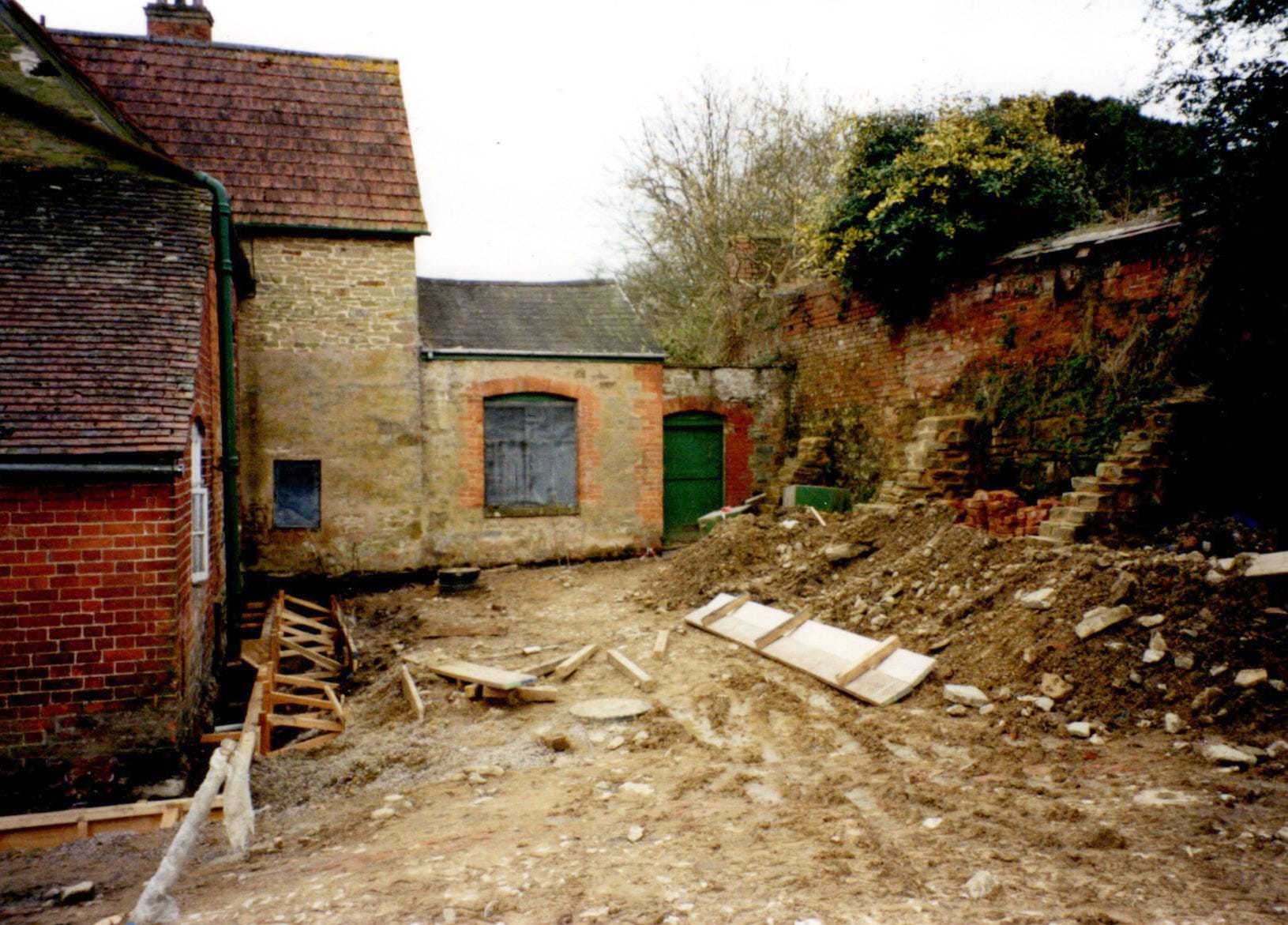
The Main House
The restoration of Homme started with the main house in 2000, around a third of which was completely derelict.
Works commenced with the replacement of the lead flashings and Welsh slate of the sixteen roofs, a project generously supported by English Heritage. Internal repairs and restoration followed, prioritising the areas of the house requiring urgent attention. The initial restoration works were completed in autumn 2021.
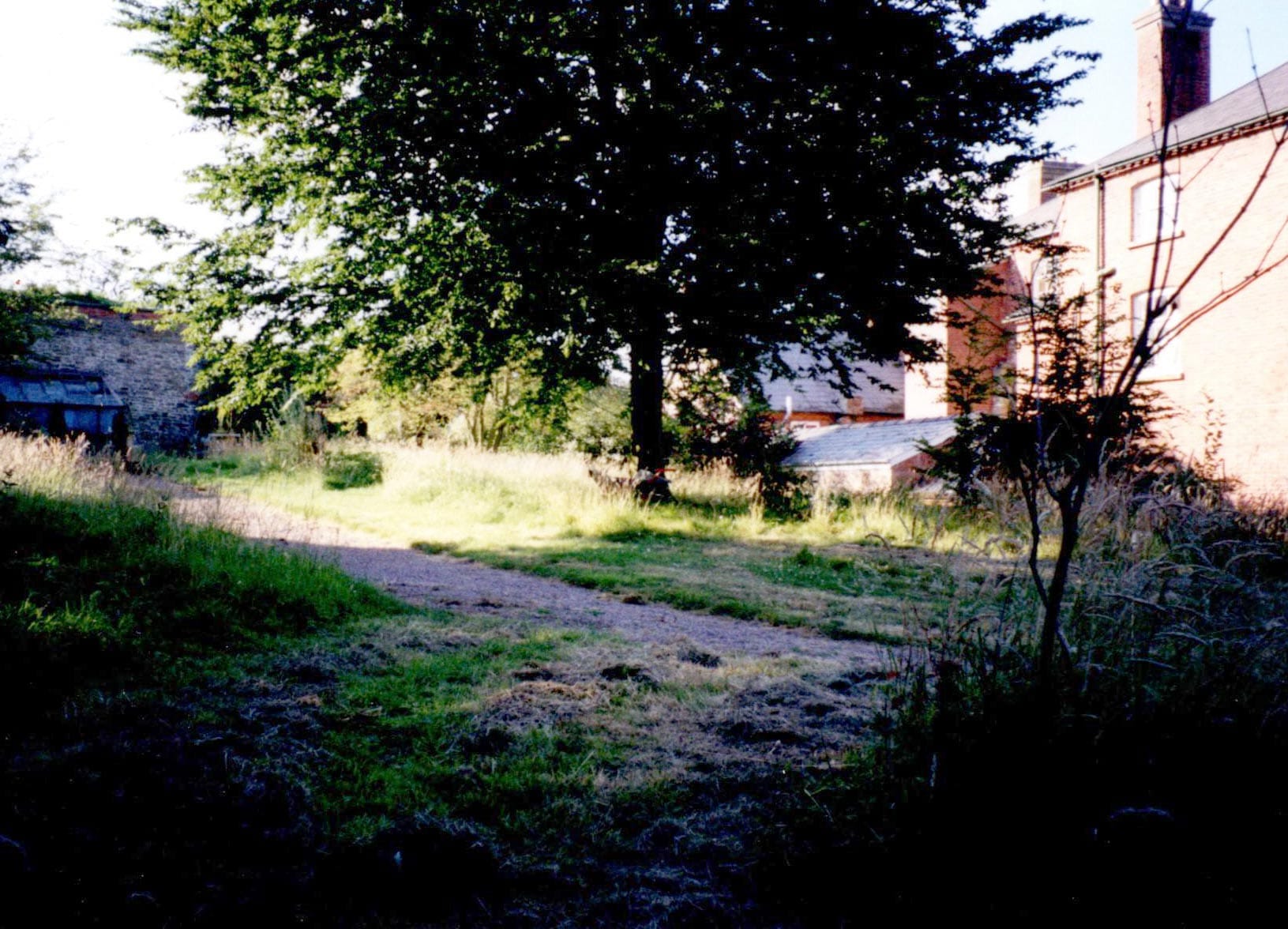
The Gardens
The restoration of the main garden started soon after the Main House works were completed.
An ongoing labour of love, an initial challenge to tackle was the restoration of the large main lawn, which required the intervention of a tractor, harrow and over 50 tonnes of fresh topsoil.

The Summerhouse
Our Grade I listed Summerhouse was on Historic England’s Heritage at Risk Register for over a decade at the start of the 2000s.
By the spring of 2011 the building was in danger of catastrophic collapse, and was rescued thanks to very generous support from English Heritage and the Country Houses Foundation (now Historic Houses Foundation), and an expert team including Richard K Morriss (architectural and archaeological assessment), Ian Stainburn (architect) and DA Cooke (heritage builders).
The restoration was completed in September 2011 and the beautiful building has been used as a romantic overnight stay and backdrop for weddings since then.
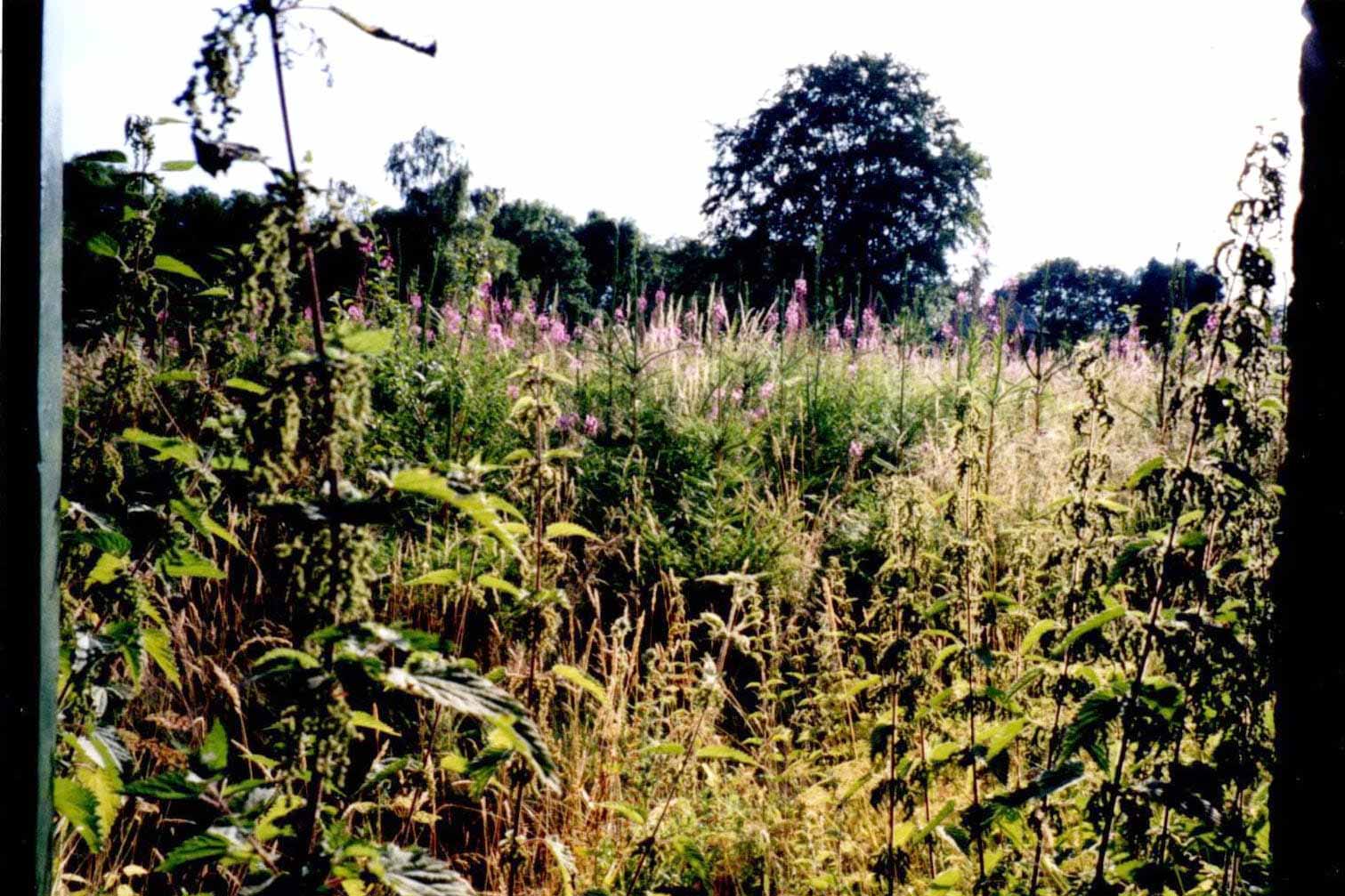
The Walled Garden
There have been many chapters in the long history of the Walled Garden, with the latter part of the twentieth century a dark one. Historical productive planting was obliterated, and a cash crop of Christmas trees planted throughout the space before being abandoned.
Our restoration started in 2001 with a battle through brambles, nettles and other weeds which had sprung up in the plantation. The conifers were removed and the whole area sown as a wild flower meadow in 2003.
In 2010 the current design was established based on the underlying historical layout, and the restoration of the space has progressed each year with local heritage apple variety planting along the espalier and in the orchard areas, the establishment of the central long borders, cherry avenue and pleached hornbeam walkway amongst other features.
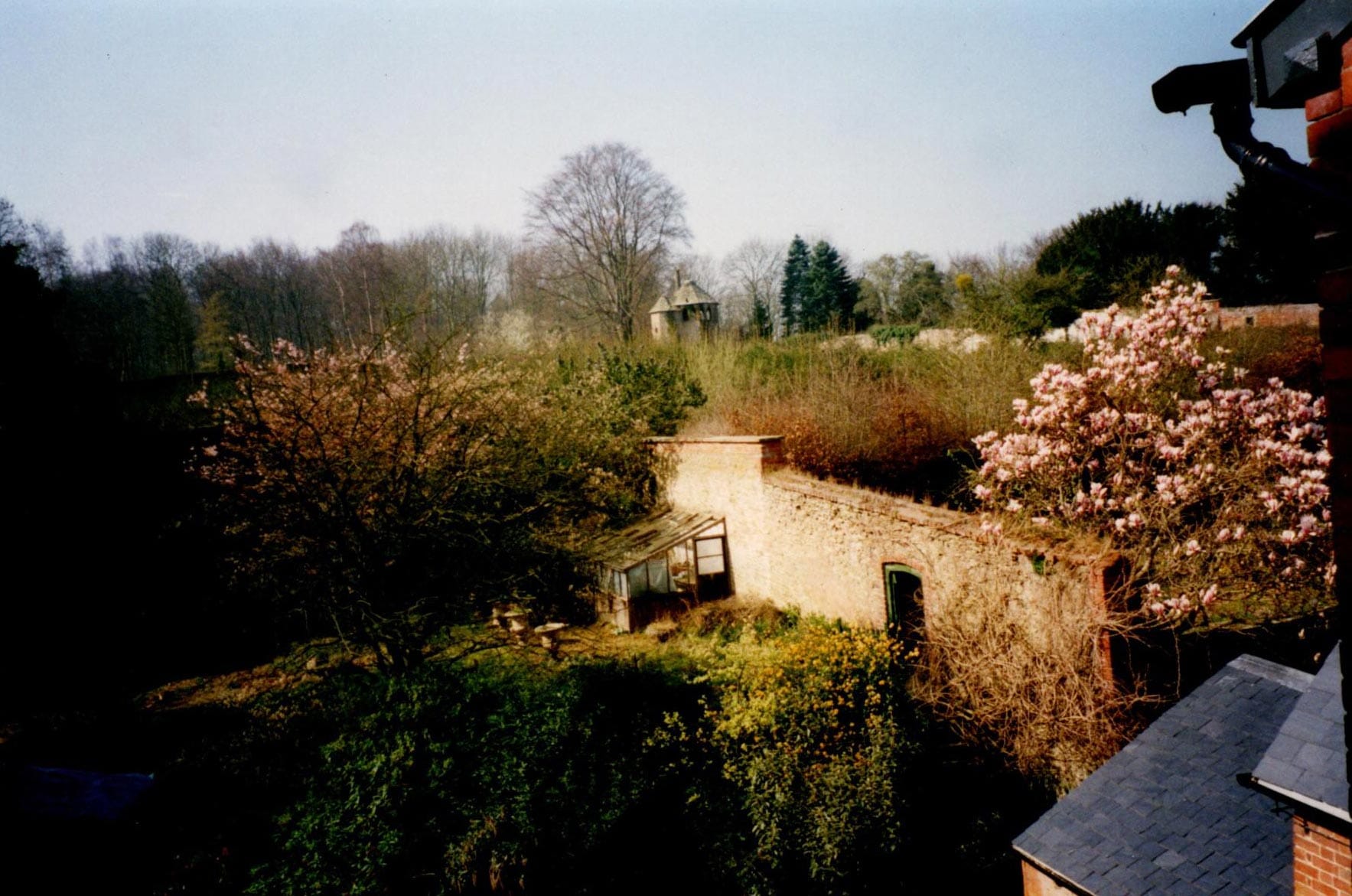
Walled Garden Walls
A particular challenge of the restoration of the Walled Garden has been its extensive perimeter wall.
Originally a stone walled enclosure, the walls were historically extended with brick and much of the fabric was in need of repair. The restoration has been a long and ongoing process, with local builder Neil Duggan making annual visits in the warmer, frost-free months to do the necessary repairs using lime mortar. Over a decade into the work the North facing wall is nearing completion, with the last stretch of the South facing wall to follow!
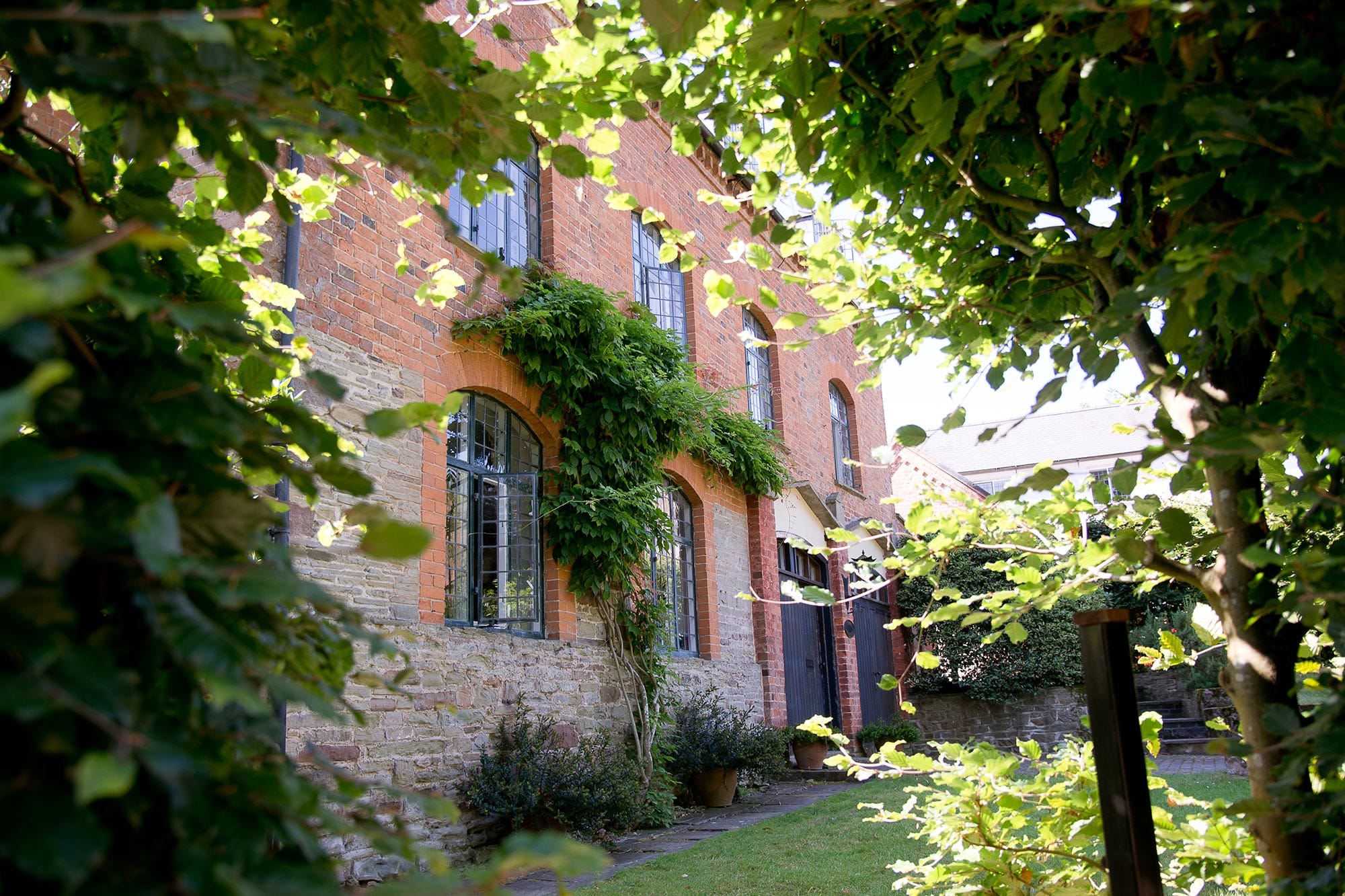
The Coach House
Sold as a necessary action to cover death duties in the second half of the twentieth century, the Coach House spent a long period outside the Estate, despite its physical connection to the castellated wing of the Main House.
It was finally brought back into the Estate in 2014 and a busy winter followed, as the Coach House was sympathetically renovated to allow its inherent character – original timberwork, leaded windows and huge inglenook fireplace – to shine.
In the summer months it now offers additional accommodation for weddings at Homme, and a characterful self-catering holiday let through the winter period.
Furniture & Furnishings
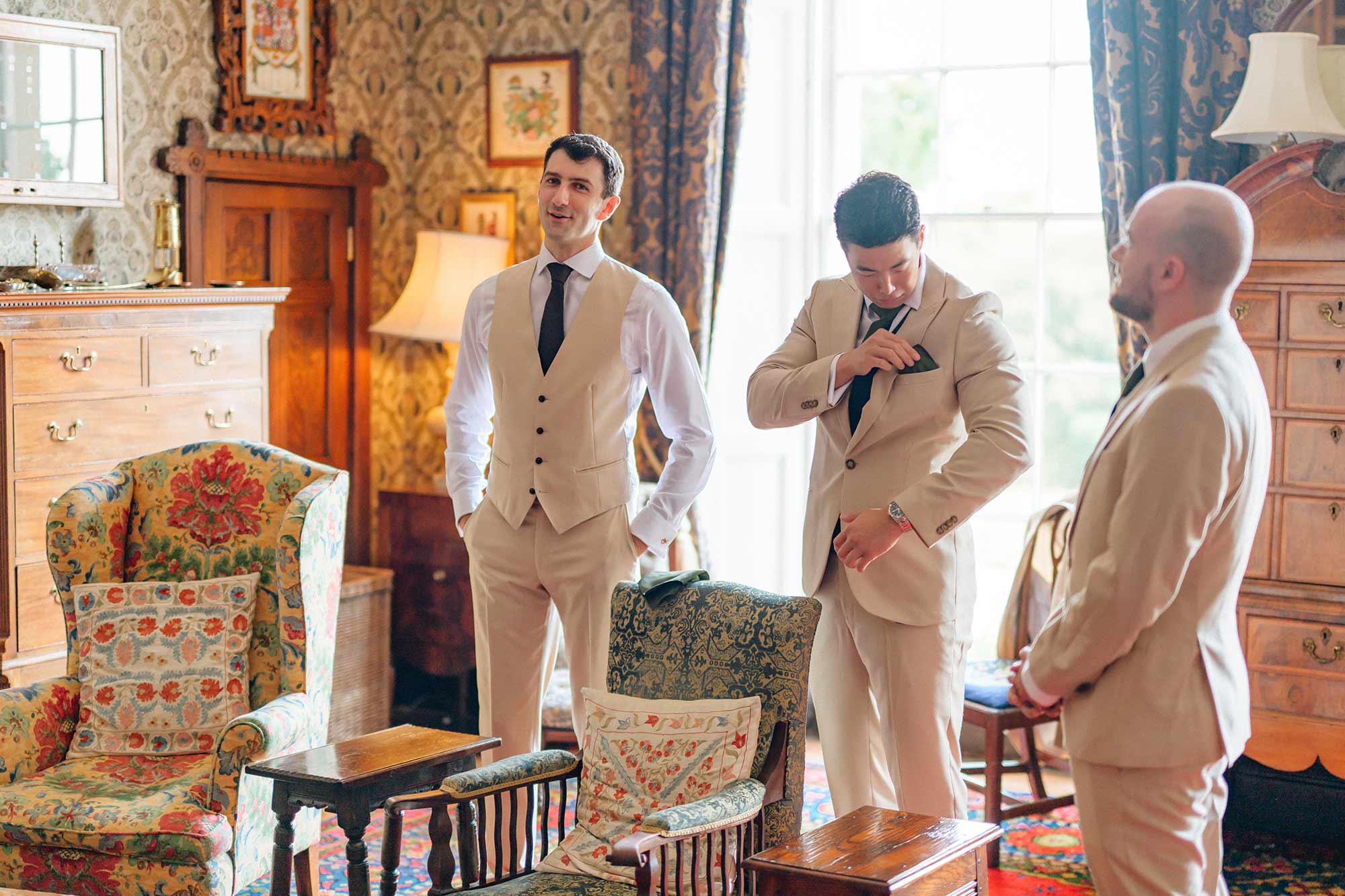
Over the last 11 years much of the beautiful furniture and furnishings of the Main House, Coach House and Summerhouse have been gently renewed.
Curtains, cushions, doorstops, valances, armchairs, sofas and even the old baize door separating ‘above stairs’ and ‘below stairs’ parts of the house have had new life breathed into them by our resident upholsterer. You can see more of her work on her professional site here.
Church Meadow
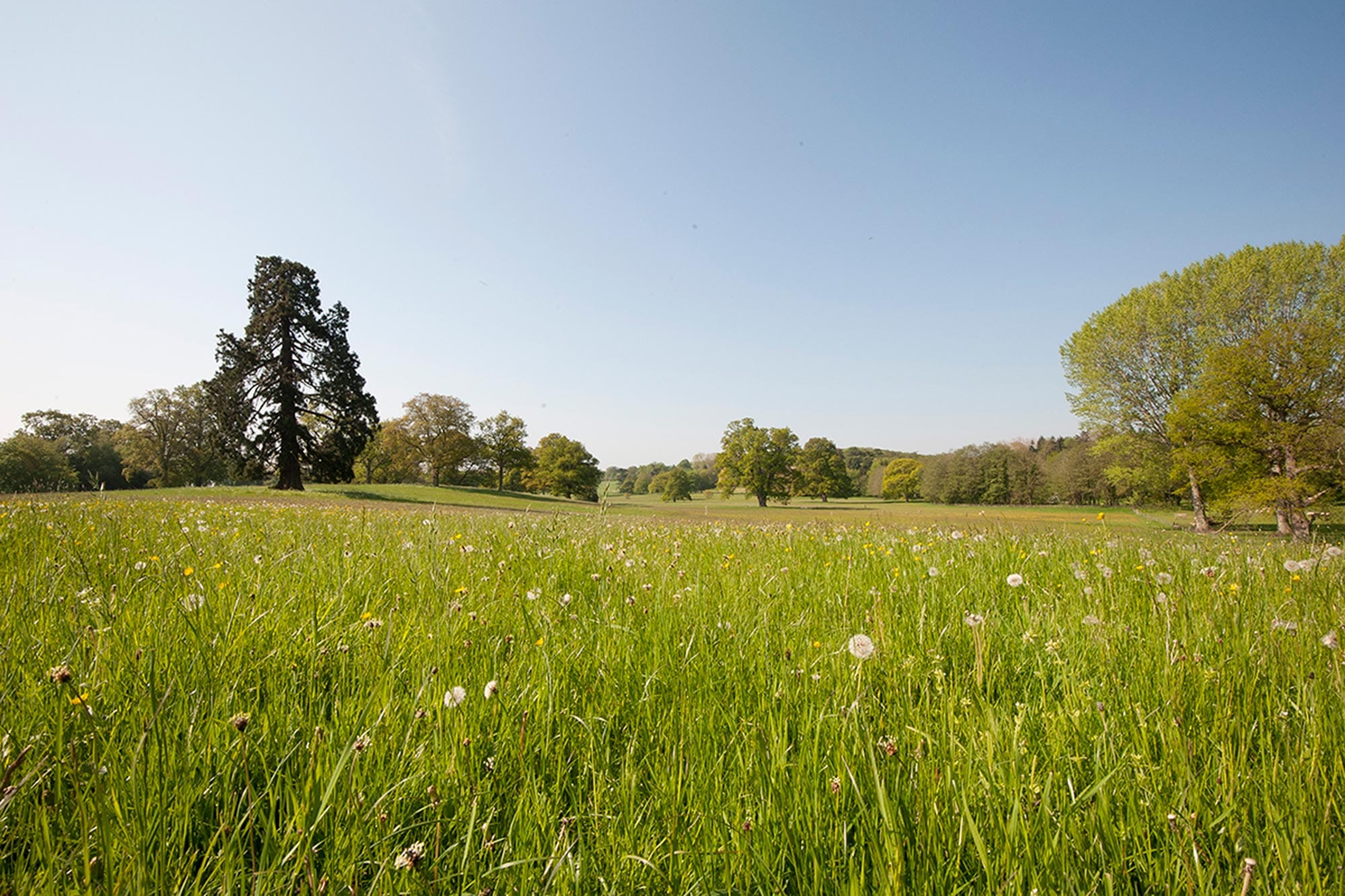
In 2023 we turned our attention to conservation work in the landscape around Homme. An exciting first project was the restoration of the Church Meadow below St. Bartholomew’s Church.
The restoration was coordinated by local charity Herefordshire Meadows, with generous financial support from The Woolhope Dome Environmental Trust and seed donated by The PlantLife Nature Reserve at Joan’s Hill Farm and local resident James Marsden, from Lower Bridge Meadow.
Woodland
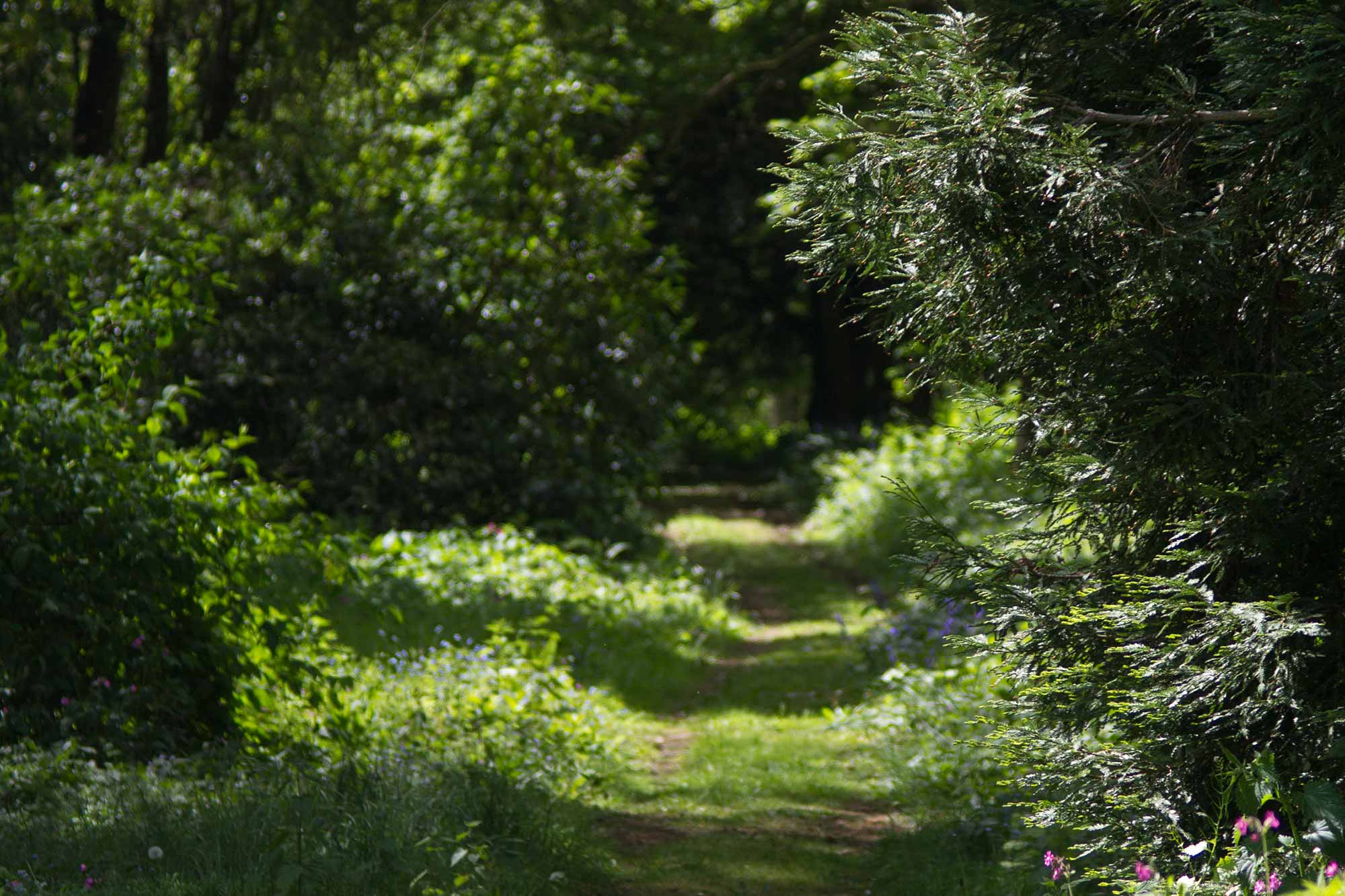
In 2023 a Forestry Commission approved woodland management plan was developed with support from Dan Wenczek of Bearwood Associates Ltd.
The 10 year plan focuses on sensitive ride widening, thinning, coppicing, natural regeneration and enrichment planting to support and encourage the biodiversity in the 60 acres of woodland around the house.

Parkland
In 2026 we are embarking on an ambitious long term project with support from Natural England to restore the 110 acres of historic parkland around the house.
The first step will be expert interrogation of all aspects of the parkland, encompassing history, archaeology, hydrology and ecology, to inform the development of a Parkland Management Plan. This will act as a foundation for sensitive management of the parkland for the long term future.